
2026-09-05 · Rick Alvarez
Can an Older Florida Home Handle an EV Charger?
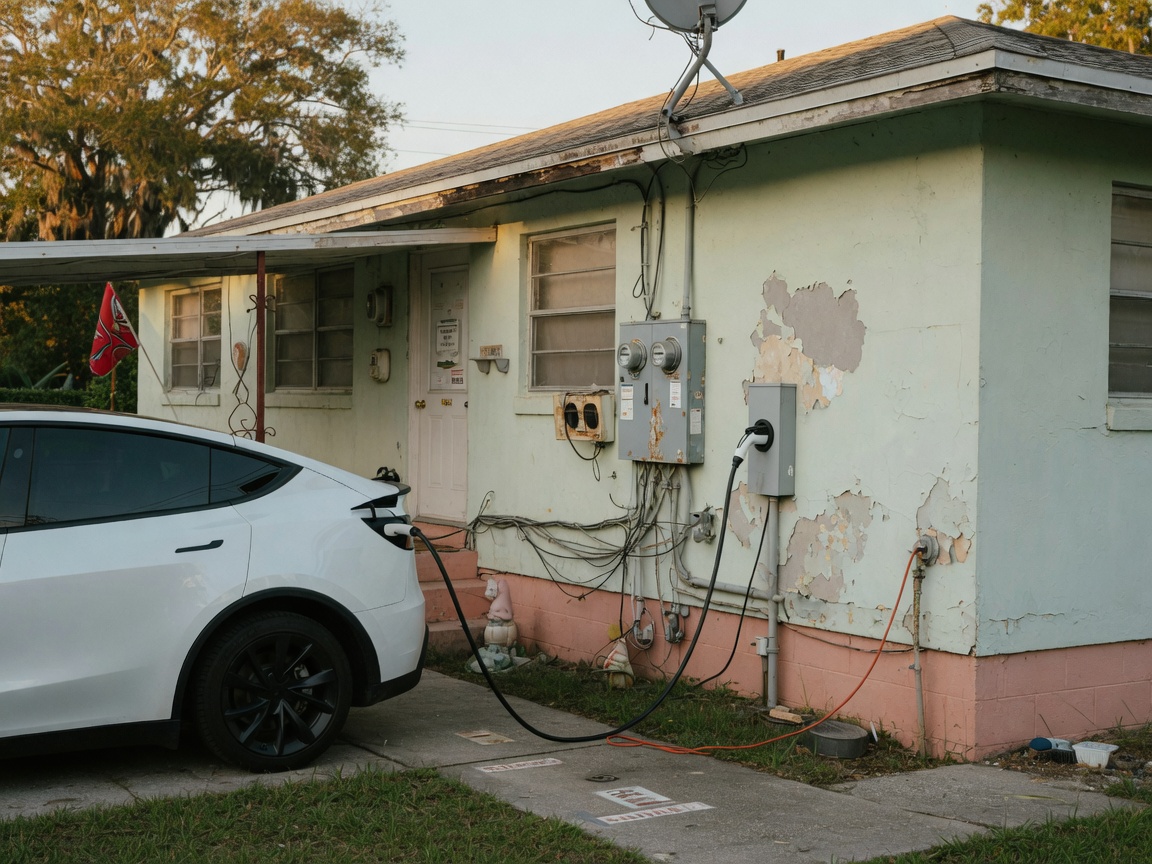
Many older homes in Riverview can handle an EV charger, but most built before 1990 require a service upgrade to at least 200 amps and new dedicated wiring to avoid overloads.
Assessing Panel Capacity in Pre-2000 Homes
Homes in Bloomingdale and FishHawk built in the 1970s and 1980s commonly arrived with 100-amp panels that cannot safely supply the 40-60 amps an EV charger draws. Checking the main breaker label and counting existing 240-volt loads such as water heaters and dryers reveals whether spare capacity exists. In Hillsborough County, soil moisture near the Alafia River can accelerate corrosion on older aluminum service entrance cables, so visual inspection of the panel and meter base is essential. Homeowners should also verify that the grounding system meets current code, since many original installations used only a single ground rod. A load calculation performed on-site accounts for the home's square footage, central air conditioning, and any future additions like a pool pump. If the calculation shows the panel is already at 80 percent capacity, replacement becomes the practical next step rather than attempting to add circuits.
How Humid Subtropical Conditions Affect Wiring
Riverview's hot summers and high humidity increase resistance in connections over time, especially in attics where temperatures exceed 120 degrees. This environment causes standard NM cable insulation to degrade faster than in drier climates, raising the risk of heat buildup when an EV charger runs for several hours. Properties near Bloomingdale Regional Park often have crawl spaces that stay damp, leading to oxidation on neutral bars inside panels. During mild winters, condensation can form on metal components when cool nights follow warm days, creating intermittent faults that only appear under load. Upgrading to THHN conductors in conduit provides better heat dissipation and moisture resistance than older cloth-insulated wiring still found in some Brandon homes. Regular torque checks on lugs every few years help maintain safe connections in this climate.
Typical Upgrade Steps for Local Properties
The process begins with a site visit to measure available amperage and map existing circuits serving the garage or driveway area. Next, the electrician determines whether the utility service drop or lateral can support 200 amps without replacement from the pole or transformer. Inside the home, running 6/3 or 4/3 copper cable from the new subpanel or main panel to a NEMA 14-50 outlet or hardwired charger location usually takes one day once permits are obtained. In neighborhoods around the Riverview Civic Center, finished walls may require fishing cable through existing chases or opening drywall sections that are later patched. Coordination with Tampa Electric ensures the meter base upgrade aligns with utility inspection schedules. After installation, the charger is tested at full output while monitoring voltage drop to confirm it stays within manufacturer limits.
When Panel Replacement Becomes Necessary
Signs that point to needed work include frequent breaker trips on existing 240-volt appliances or flickering lights when large loads start. Homes in Valrico and Lithia often share these symptoms because original 100-amp services were never sized for modern appliances plus vehicle charging. Replacing the panel also allows addition of AFCI and GFCI protection now required by code in living areas and garages. The physical size of the new panel should provide at least 20-30 empty spaces to accommodate future circuits without crowding. Cost factors include the amperage rating, whether the meter base must move, and the length of new service entrance conductors required by site conditions. After the upgrade, the home gains capacity for other high-draw equipment such as tankless water heaters or whole-house generators.
Reviewing the Signs Your Electrical Panel May Need Repair or Replacement helps identify issues early. Homeowners can also read Why Does My Circuit Breaker Keep Tripping? for related symptoms. For the actual charger work, see the details on EV Charger Installation and Electrical Panel Repair & Replacement.